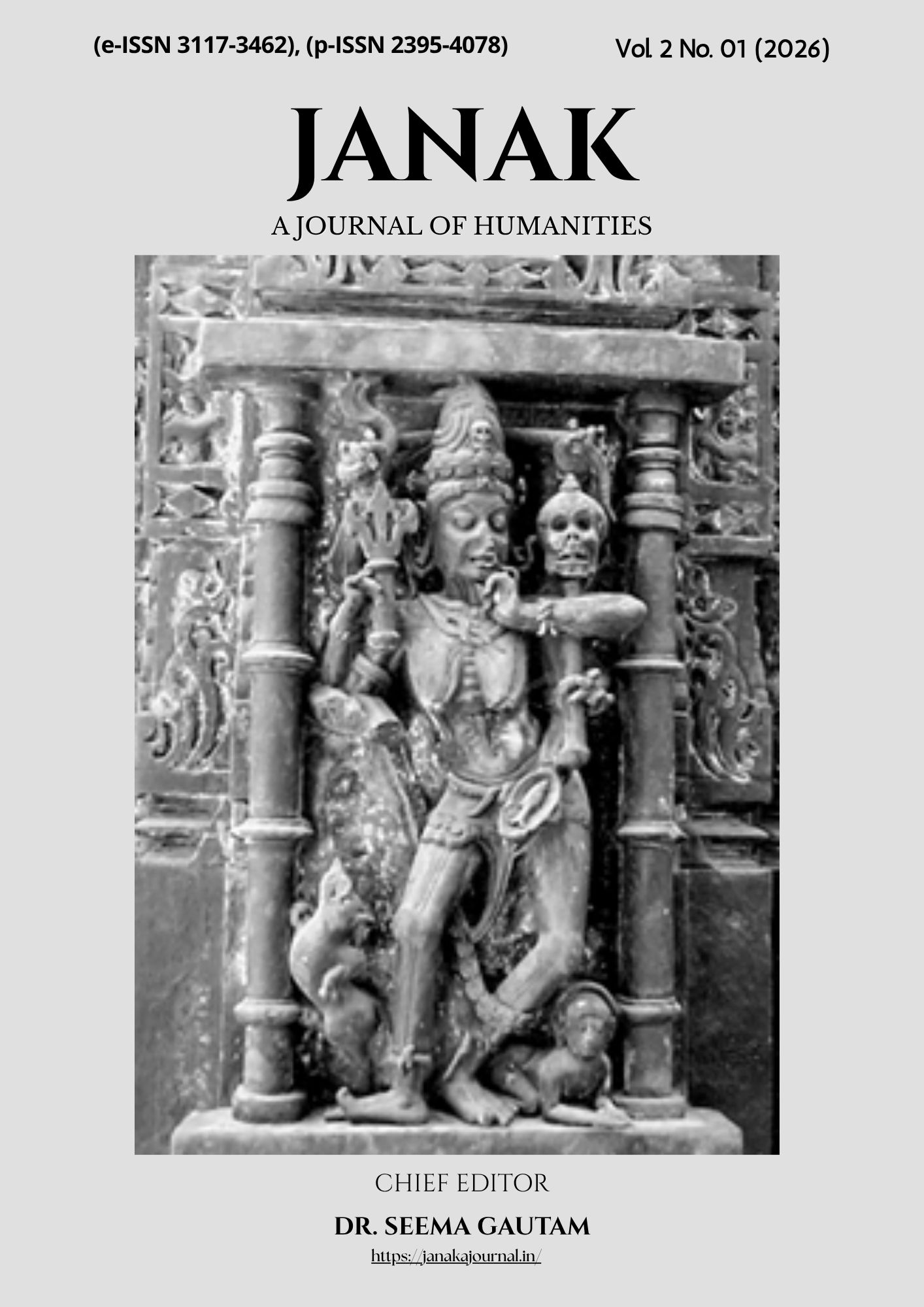
‘Death, Dissolution, and Transcendence in Indian Temple Architecture
'An Archaeological and Cosmological Inquiry’
Keywords:
Death and dissolution; Indian temple architecture; samsāra; pralaya; mokṣa; nirvāṇa; garbhagṛha; stupa; samavasaraṇa; wooden temples of the Himalayas.Abstract
Indian sacred architecture encodes doctrines of death and dissolution through ritualized space rather than literal funerary representation. Hindu temples, Buddhist stupas, and Jain samavasaraṇa halls each respond to mortality by placing the body, cosmos, and soul into meaningful alignment. This paper examines how these architectural forms internalize ideas of cosmic destruction (pralaya), cyclic rebirth and ultimate transcendence. By analyzing canonical texts, archaeological evidence and regional variations, the study argues that the temple is both womb and tomb; the stupa, a cosmic reliquary; the Jain hall, a model universe. These structures guide devotees from the impermanent world toward liberation-whether mokṣa, nirvāṇa or kevalajñāna-by transforming death into a ritual passage.